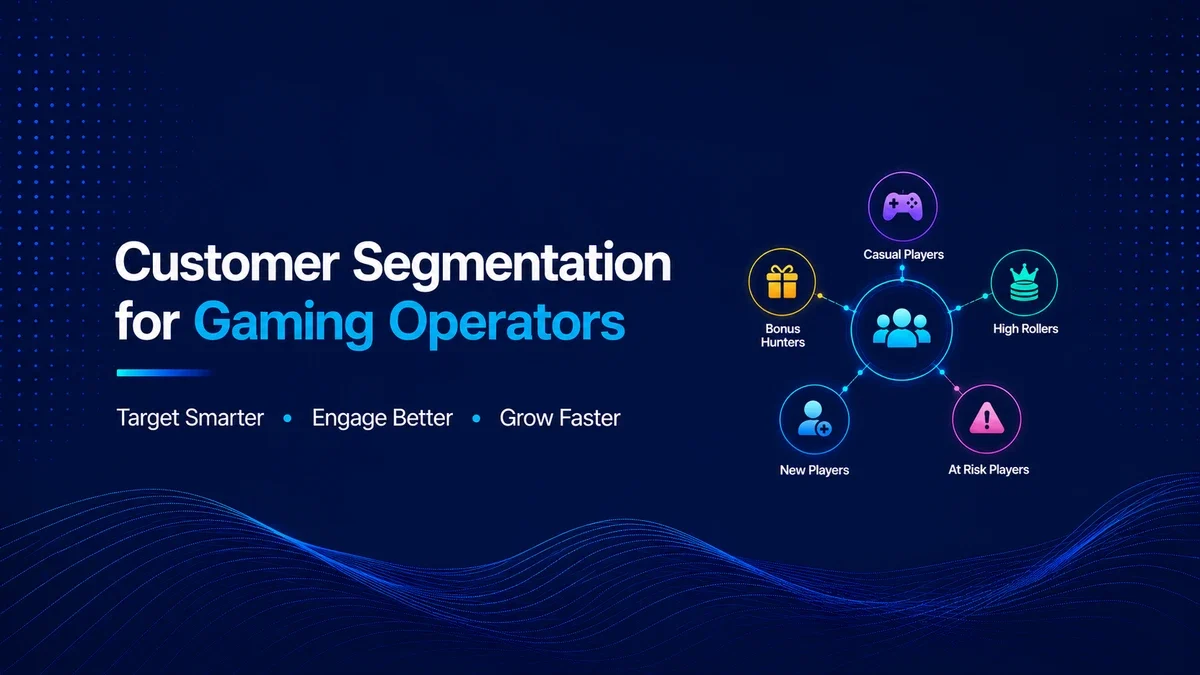
Customer segmentation has become a core part of modern iGaming CRM strategy. Gaming operators no longer compete only on bonuses or acquisition spend. Retention, personalization, and lifecycle engagement now drive long-term profitability.
However, many operators still rely on broad audience groups and static campaigns. The result is poor engagement, bonus abuse, lower retention, and inefficient CRM execution.
Effective customer segmentation allows gaming operators to group players based on behavior, value, lifecycle stage, and engagement patterns. Instead of sending generic campaigns to everyone, operators can create targeted player experiences that improve retention, increase lifetime value, and optimize marketing spend.
Modern segmentation strategies combine behavioral analytics, CRM automation, predictive signals, and real-time player activity to trigger more relevant communication at every stage of the player journey.
For operators looking to build more advanced segmentation strategies, this guide on
player segmentation in iGaming
explains how segmentation frameworks support retention, VIP growth, and CRM automation.
Why Customer Segmentation Matters for Gaming Operators
Customer segmentation helps gaming operators better understand player intent, behavior, and value.
Without segmentation:
- campaigns become generic
- bonuses are wasted
- churn signals go unnoticed
- high-value players receive poor experiences
With effective segmentation:
- CRM campaigns become more personalized
- retention improves
- engagement increases
- lifecycle automation becomes more effective
Segmentation also helps operators identify:
- VIP players
- churn-risk users
- bonus-sensitive players
- inactive depositors
- high-intent non-depositors
Behavioral Segmentation for Gaming Operators
Behavioral segmentation is one of the most important segmentation strategies in iGaming.
Instead of grouping players by demographics alone, behavioral segmentation focuses on:
- deposit activity
- betting frequency
- session duration
- game preferences
- bonus usage
- inactivity patterns
For example, a player who deposits regularly but suddenly reduces activity may enter a churn-risk segment. Another player who repeatedly deposits during sportsbook events may belong to an event-driven sportsbook segment.
These behavioral patterns allow operators to trigger:
- personalized bonuses
- retention campaigns
- onboarding flows
- VIP upgrades
- real-time CRM actions
Behavioral segmentation works best when integrated with CRM automation and real-time analytics.
Learn more about behavioral analytics in CRM and how operators use player activity data to improve retention.
Lifecycle Segmentation in iGaming
Player needs change across different lifecycle stages.
A first-time depositor requires different communication compared to a VIP player or churn-risk user.
Lifecycle segmentation helps operators manage players through stages such as:
- new registration
- first-time deposit
- active player
- loyal player
- VIP
- churn risk
- reactivated player
Each segment requires different CRM workflows and messaging strategies.
- FTD players may receive onboarding campaigns
- active players may receive personalized recommendations
- churn-risk users may receive retention incentives
- VIP players may receive exclusive rewards
Operators using player journey mapping in iGaming often achieve stronger retention because campaigns align with player intent and lifecycle behavior.
VIP and High-Value Player Segmentation
Not all players contribute equally to revenue.
High-value players often generate a significant percentage of operator revenue, making VIP segmentation critical.
Gaming operators typically segment VIP players using:
- deposit frequency
- wagering behavior
- average session value
- engagement consistency
- player lifetime value
VIP segmentation helps operators:
- deliver exclusive offers
- prioritize customer support
- reduce churn among high-value players
- increase loyalty
Advanced operators also use predictive models to identify emerging VIP players before they reach high-value thresholds.
Learn how operators identify high-value players in iGaming using behavioral and retention signals.
Churn-Risk Segmentation and Retention
One of the biggest benefits of customer segmentation is early churn detection.
Many operators react too late after players become inactive.
Churn-risk segmentation helps identify:
- declining deposit activity
- shorter sessions
- reduced betting frequency
- lower engagement patterns
- abandoned onboarding journeys
Once players enter churn-risk segments, operators can trigger:
- retention campaigns
- personalized offers
- free spin incentives
- deposit reminders
- CRM workflows
Learn how predictive analytics in casino retention helps identify churn signals earlier.
Real-Time CRM Segmentation Workflows
Modern segmentation is no longer static.
Real-time CRM segmentation allows operators to update player segments instantly based on behavior.
Examples include:
- deposit completed
- failed payment attempt
- inactivity detected
- sportsbook event engagement
- sudden wager increase
- bonus activation
This enables automated CRM actions such as:
- instant push notifications
- triggered email campaigns
- personalized SMS messages
- retention offers
- VIP alerts
Common Segmentation Mistakes Gaming Operators Make
- relying only on demographics
- using static segments
- failing to connect CRM workflows
- ignoring churn signals
- overusing bonus targeting
- failing to personalize communication
Effective segmentation requires:
- clean player data
- behavioral tracking
- lifecycle understanding
- automation workflows
- measurable retention goals
How OptiKPI Helps Gaming Operators Improve Segmentation
OptiKPI helps gaming operators combine:
- player segmentation
- CRM automation
- behavioral analytics
- lifecycle workflows
- real-time engagement
Operators can create dynamic segments based on:
- deposits
- activity patterns
- player lifecycle stage
- game preferences
- retention signals
These segments can automatically trigger:
- push notifications
- email campaigns
- SMS workflows
- VIP engagement campaigns
- churn prevention actions
Key Takeaways
- Customer segmentation helps gaming operators improve retention and CRM efficiency
- Behavioral segmentation is critical for identifying player intent and churn signals
- Lifecycle segmentation improves onboarding, retention, and VIP engagement
- Real-time segmentation enables automated CRM workflows
- Predictive analytics helps operators identify churn risk earlier
- Effective segmentation improves player lifetime value and engagement
Conclusion
Customer segmentation is no longer optional for gaming operators competing in modern iGaming markets.
Advanced segmentation strategies allow operators to personalize engagement, automate CRM workflows, improve player retention, identify high-value players, and reduce churn risk.
The most effective operators combine behavioral analytics, lifecycle segmentation, predictive signals, and real-time automation to deliver more relevant player experiences.
Transform Player Data into Smarter Segments
Effective customer segmentation goes beyond reporting. OptiKPI helps iGaming operators use AI-powered player intelligence, behavioral analytics, and CRM automation to identify high-value players, personalize engagement, reduce churn, and increase player lifetime value.
FAQs
Customer segmentation for gaming operators is the process of grouping players based on behavior, value, lifecycle stage, and engagement patterns to improve CRM campaigns, retention, and personalization.
Gaming operators segment players using behavioral data such as deposits, wagering activity, session duration, game preference, and lifecycle stage to create targeted CRM campaigns.
Behavioral segmentation in iGaming groups players based on actions such as deposits, betting patterns, activity frequency, and engagement behavior to improve personalization and retention.
Player segmentation helps operators identify churn-risk players, personalize campaigns, improve onboarding, and deliver more relevant offers that increase player retention and lifetime value.
Gaming operators use CRM platforms, behavioral analytics tools, real-time engagement platforms, and predictive analytics systems to build dynamic player segmentation workflows.