The most profitable operators understand this: Player Retention KPIs in iGaming are not about reacting to inactivity. They are about identifying early churn signals while players are still active. It’s about identifying early churn signals in online gaming while players are still active, and intervening before revenue disappears.
Churn is rarely an event. It is a measurable behavioral progression.
A player logs in less frequently. Deposits stretch out. Session intensity drops. Campaigns go unopened. What looks like normal behavioral fluctuation is often the beginning of disengagement.
This is where mastering the right Player Retention KPIs in iGaming becomes a strategic advantage.
This article focuses specifically on predictive retention KPIs and behavioral deviation signals. Tactical churn reduction strategies and operational retention playbooks are covered separately.
Why Early Churn Detection Defines Competitive Operators
Acquisition costs continue to rise across regulated markets. Affiliates, paid traffic, and media buys are more expensive than ever. Yet many operators still manage retention using lagging indicators such as:
- 30-day inactivity flags
- Monthly retention percentages
- Static cohort analysis
- GGR decline reports
These metrics confirm churn , they don’t prevent it.
Modern retention analytics for iGaming operators must shift from historical reporting to predictive behavioral tracking.
Instead of asking:
Who has churned?
Operators should ask:
Who is starting to disengage?
The Most Important Player Retention KPIs in iGaming
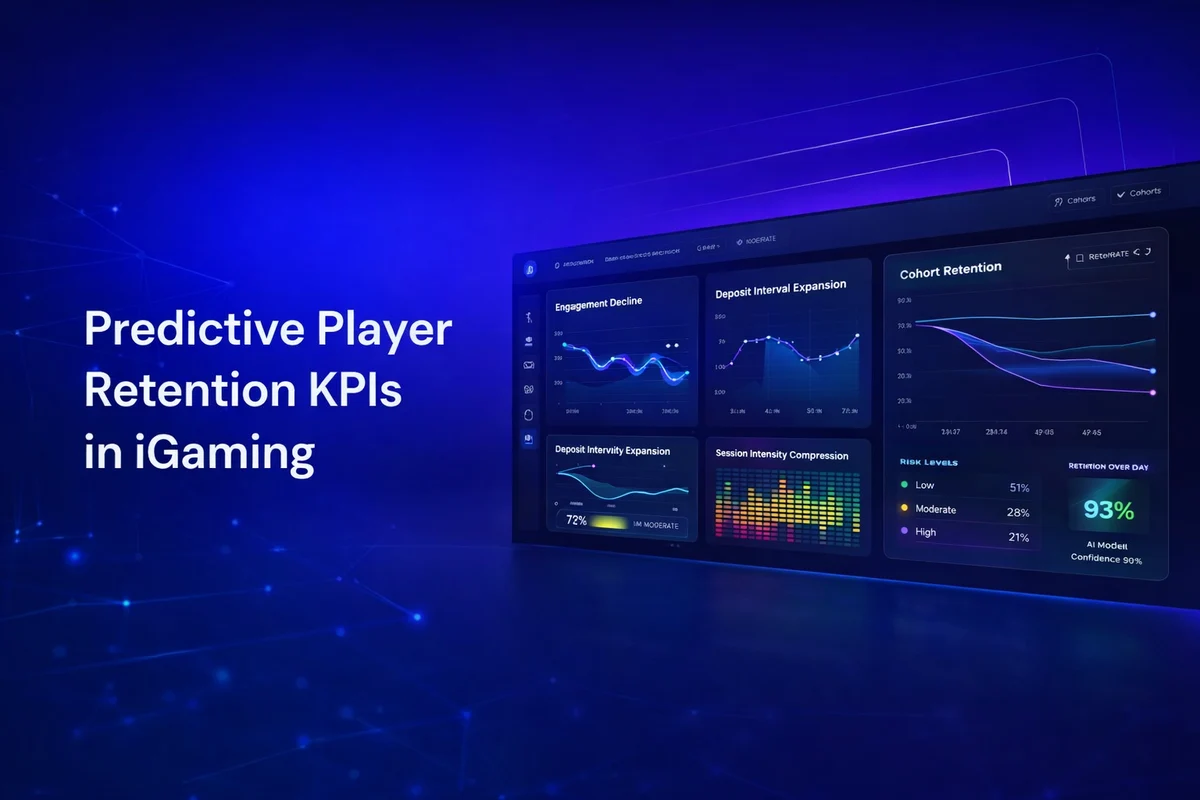
Below are the strongest predictive retention metrics that consistently signal churn before it occurs.
1. Engagement Frequency Deviation
Every player develops a behavioral rhythm.
- Daily logins
- Weekend sportsbook activity
- Evening slot sessions
- Payday deposits
When that rhythm shifts, churn risk increases.
What to Measure:
- Active days per week
- Session count over rolling 14 days
- Percentage deviation from personal baseline
A 25-40% drop in engagement frequency is often one of the earliest iGaming churn indicators , even if deposits haven’t declined yet.
Why this KPI works:
- It captures emotional disengagement before financial decline.
- It reflects habit erosion.
- It provides a 7-14 day intervention window.
The key is comparing players against their own historical patterns , not global averages.
2. Deposit Interval Expansion
Most operators track deposit value. Fewer track deposit timing. And timing is often more predictive.
What to Measure:
- Average days between deposits
- Deviation from historical deposit cycle
- Days since expected deposit
Example:
A player who typically deposits every 3 days stretches to 9 days. That single shift can increase churn probability dramatically over the next two weeks. Habit consistency is central to retention. Once deposit cadence breaks, recovery becomes harder.
Among predictive retention metrics, deposit interval expansion consistently ranks as one of the strongest churn predictors.
3. Session Value Compression
Churn doesn’t always start with absence, it often starts with downshifting.
What to Track:
- Average bet size
- Session turnover
- Session duration
- Total stake per visit
If a player’s session intensity declines steadily across multiple visits, it signals reduced platform commitment.
Important distinction:
- Volatility = normal
- Sustained compression = risk
This KPI is especially critical for casino-heavy operators where high-value players gradually reduce exposure before exiting.
4. Cross-Product Narrowing
Engaged players explore. At-risk players narrow.
What to Measure:
- Number of verticals played (casino, sportsbook, live casino)
- Game diversity over time
- Cross-sell engagement patterns
A player who previously engaged across sportsbook and live casino but now only spins one slot occasionally is signaling declining platform immersion. Behavioral narrowing reduces switching costs, making churn more likely. This is one of the most underutilized early churn signals in online gaming.
5. Campaign Response Decay
Marketing engagement is often the first visible sign of detachment.
Track:
- Email open rates
- Push click-through rates
- Bonus redemption frequency
- SMS interaction rates
When communication responsiveness declines, brand affinity weakens. Rather than viewing this purely as a campaign performance issue, it should be treated as a behavioral churn signal.
Declining responsiveness, when analyzed alongside engagement and deposit KPIs, strengthens churn risk accuracy. The focus here is measurement, not campaign redesign.
Effective retention analytics for iGaming operators integrate communication data directly into churn modeling rather than treating it separately.
6. Bonus Dependency Ratio
Not all engagement is equal. Some players engage organically. Others only engage when incentivized.
What to Measure:
- Percentage of sessions triggered by bonus campaigns
- Organic vs incentivized turnover ratio
- Deposit activity without bonus support
If organic play decreases and engagement only occurs post-offer, retention becomes fragile and expensive.Increasing bonus size may delay churn, but it rarely fixes underlying disengagement.Long-term retention requires behavioral reactivation, not just financial stimulation.
7. VIP Cooling Index
VIP churn impacts revenue disproportionately.
High-value players rarely disappear suddenly. Instead, they:
- Reduce deposit size
- Decrease stake frequency
- Avoid premium games
- Respond less to host outreach
A structured VIP cooling KPI should track:
- Deposit deviation
- Session compression
- Cross-product narrowing
- Communication responsiveness
This index should be used as an early warning mechanism, not as a trigger for ad-hoc tactical decisions. Structured workflows should already exist before thresholds are breached.
8. Behavioral Stability Score
Consistency predicts retention more reliably than volume. A player depositing $200 weekly is more stable than one depositing $1,000 sporadically.
Measure:
- Variance in deposit intervals
- Variance in session frequency
- Volatility in betting behavior
Higher behavioral volatility often correlates with higher churn probability. This KPI shifts focus from magnitude to stability , a crucial evolution in predictive retention metrics.
Combining Player Retention KPIs Into Predictive Churn Models
Single metrics are informative. Combined metrics are powerful. The most effective churn prediction frameworks blend:
- Engagement frequency deviation
- Deposit interval expansion
- Session compression
- Campaign response decay
- Behavioral narrowing
- Bonus dependency
When multiple indicators align, churn probability increases exponentially.
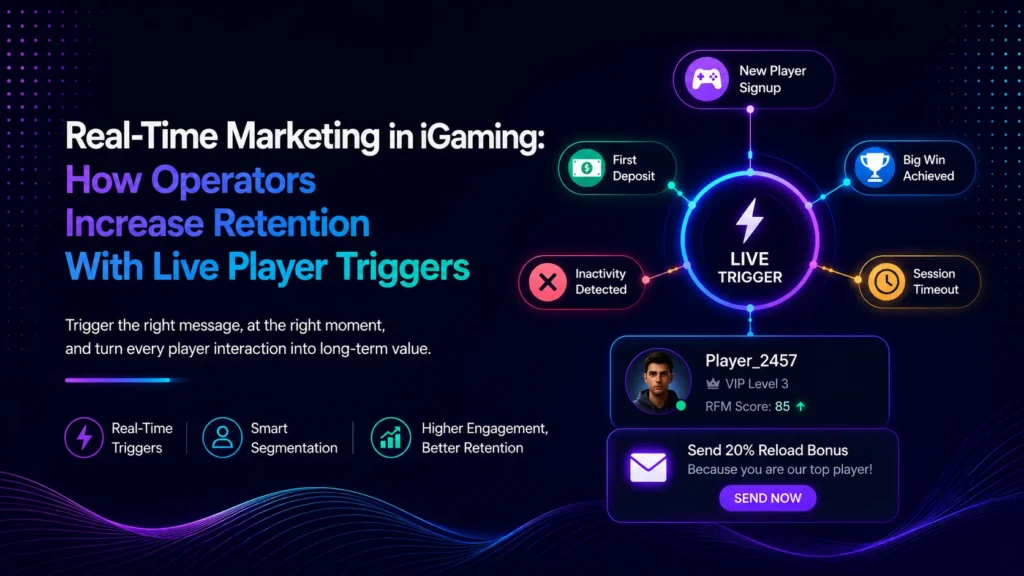
Modern CRM environments increasingly rely on AI-driven behavioral analysis to surface churn risk patterns in real time. The objective is not to design new campaigns, but to activate predefined retention workflows when measurable behavioral thresholds are breached.
The advantage is not just detection, but detection speed aligned with structured execution.
Turning Early Churn Signals Into Action
Identifying churn risk is only half the battle. Execution timing determines ROI.
From KPI Detection to Structured Workflow Activation
Predictive retention KPIs should trigger predefined CRM workflows rather than ad-hoc tactical decisions. The speed of response often determines recovery success more than the size of the incentive itself.
This article focuses on KPI detection logic; tactical retention strategies and execution frameworks are addressed separately. For a deeper look at practical churn reduction strategies in online casinos, see our guide on how to reduce churn in online casinos.
Responsible Retention & Compliance
Retention strategy must balance profitability with regulation.
Predictive systems should ensure:
- Human approval before campaign execution
- Transparent AI recommendations
- Compliance with marketing regulations
- Alignment with responsible gaming principles
Retention done irresponsibly creates long-term regulatory and brand risk. Retention done intelligently builds sustainable lifetime value.
Why Predictive Retention KPIs Drive iGaming Growth
In saturated and regulated markets, acquisition alone cannot drive profitability.
Operators who master Player Retention KPIs in iGaming gain:
- Reduced acquisition dependency
- Higher lifetime value
- Lower bonus waste
- Greater VIP stability
- Improved revenue forecasting accuracy
- Faster CRM decision-making
The difference between average and elite operators increasingly lies in behavioral precision , not promotional aggression.
Final Thoughts
Churn is not a sudden event. It is a behavioral progression. And behavior leaves measurable signals.
The operators who win in 2026 and beyond will not be the ones reacting to 30-day inactivity reports , but those continuously tracking:
- Engagement deviation
- Deposit rhythm changes
- Session intensity trends
- Campaign response decay
- Cross-product narrowing
These are the real iGaming churn indicators.
With predictive retention metrics and AI-enhanced retention analytics for iGaming operators, churn becomes manageable,not mysterious.
Because in modern iGaming, retention is no longer reactive. It is predictive.
FAQs: Player Retention KPIs in iGaming
Player Retention KPIs in iGaming are behavioral metrics that identify churn risk before inactivity occurs. The most important include engagement frequency deviation, deposit interval expansion, session value compression, campaign response decay, and cross-product activity trends. These metrics track changes against individual player baselines rather than overall averages.
The strongest iGaming churn indicators are behavioral deviations rather than inactivity flags. Key signals include fewer active days per week, longer gaps between deposits, declining bet size, reduced session duration, and lower CRM campaign response. Sustained deviation from a player’s normal activity pattern signals increasing churn probability.
Predictive retention metrics help reduce churn by identifying behavioral disengagement before players become inactive. By analyzing changes in deposit timing, session intensity, and engagement frequency, operators can trigger structured retention workflows earlier and improve recovery rates.
Deposit timing is often more predictive than deposit value because it reflects habit stability. A sudden increase in the interval between deposits signals behavioral disruption, even if deposit amounts remain consistent. Habit erosion is one of the earliest indicators of churn risk.
Retention analytics improves profitability by detecting churn risk early and stabilizing high-value segments. By prioritizing predictive behavioral KPIs over lagging revenue reports, operators reduce bonus waste, protect VIP value, and improve lifetime value forecasting accuracy.