
Thousands of players register. A healthy percentage deposit. Games are being played. Acquisition numbers look strong. The campaign appears to be working.
Then comes the question that matters far more than the registration count.
How many of those players will still be playing 30, 60 or 90 days from now?
Acquisition gets a player through the door. The harder commercial challenge begins once they are inside. Every gaming session creates another decision point. Does the player return tomorrow? Do they choose another casino? Does their activity slowly decline until they disappear from the active player base?
This is where casino loyalty programs become commercially important. A strong loyalty strategy gives players more than a reward for wagering. It creates recognition, progression and a sense that their relationship with the casino has value.
For operators, the opportunity is broader. Loyalty can support player engagement, behavioural segmentation, retention, reactivation and longer player relationships. But simply having points, tiers and rewards does not create loyalty. The program has to give players a genuine reason to care. And increasingly, that requires loyalty to work alongside player data, segmentation and real-time CRM.
of annual online gaming revenue comes from players acquired in previous years, highlighting just how much long-term growth depends on retaining existing players beyond initial acquisition.
What Are Casino Loyalty Programs?
A casino loyalty program is a structured rewards system that recognises player activity and encourages continued engagement. Players may earn points, progress through tiers or receive benefits based on defined behaviours. The goal is to create ongoing value beyond a single gaming session or promotion.
The idea itself is not new. Land-based casinos have long used comp systems to recognise returning guests. Regular players could receive meals, hotel stays, entertainment, dedicated hosts or other benefits based on their activity and value to the property.
Online casinos expanded that concept. The digital environment allows loyalty mechanics to become far more dynamic. Operators can combine loyalty points, VIP tiers, cashback, personalised incentives, challenges, missions and exclusive benefits within the wider player experience. More importantly, digital operators can connect those mechanics to player data.
That creates an important distinction between promotions and loyalty.
A promotion gives someone a reason to play now. A loyalty program gives them reasons to keep coming back.
A welcome bonus, free spins offer or seasonal campaign may generate immediate activity. Once that incentive ends, the player faces another decision about whether to return.
more expensive to acquire a new customer than to retain an existing one, making the economics of loyalty difficult to argue with.
How Do Casino Loyalty Programs Work?
Most casino loyalty programs follow a simple behavioural loop:
Players generate qualifying activity, earn points or status, progress toward defined milestones and gain access to rewards or benefits. From the player's perspective, this should feel simple. Activity creates progress. Progress creates value.
Behind the interface, however, a much larger data story is unfolding. Every deposit, game preference, session, campaign interaction, reward redemption and change in activity can provide useful context. Modern casino CRM systems can bring these signals together so operators can understand not just what a player has earned, but what is happening in that player's relationship with the brand.
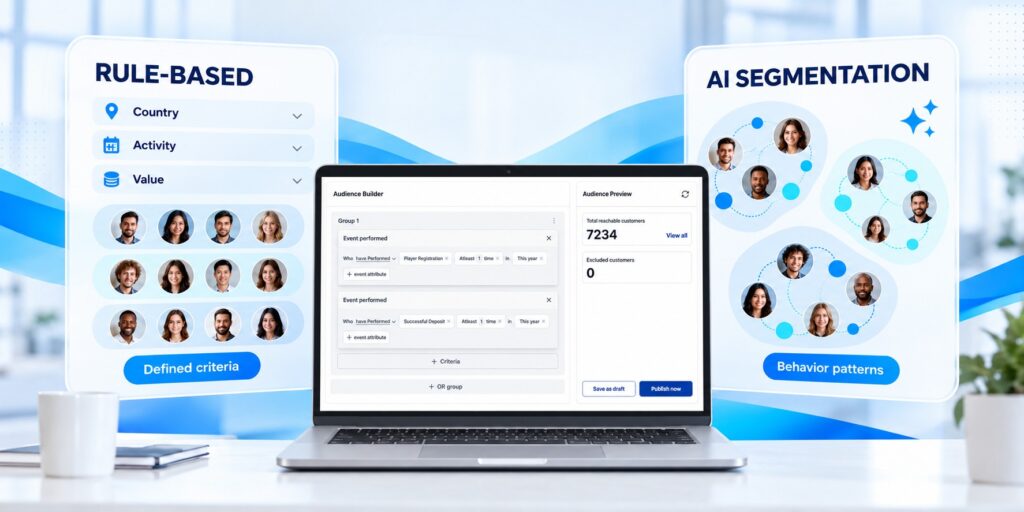
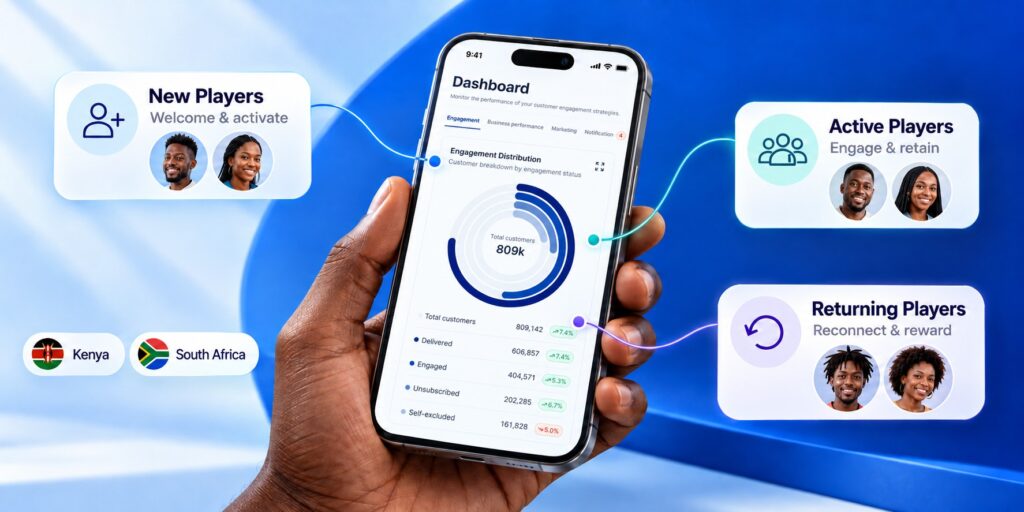
This is where loyalty becomes significantly more intelligent. Instead of every player receiving the same promotion because they belong to the same loyalty tier, operators can use behavioural segmentation to create more relevant engagement.
- A regular slots player may respond differently from a live casino player.
- A recently acquired player should not necessarily receive the same journey as a long-term VIP.
- A previously active player whose engagement is declining may need an entirely different approach.
Platforms such as OptiKPI help operators connect real-time player data with segmentation, campaign automation and player engagement, allowing loyalty and retention activity to become part of a broader CRM strategy rather than an isolated rewards system.
Your loyalty program knows what a player has earned. Does your CRM know what they need next?
See how OptiKPI helps iGaming operators turn real-time player behaviour into smarter segments, personalised engagement and retention journeys.
Book an OptiKPI DemoTypes of Casino Loyalty Programs
There is no single loyalty model that works for every casino or every player. Different structures encourage different behaviours. The right choice depends on the player base, brand proposition, economics of the program and the experience an operator wants to create.
Points-Based Loyalty Programs
Points-based programs are the most familiar model. Players complete qualifying activity, accumulate points and redeem them for defined rewards. Their biggest advantage is clarity. A casual or regular player can understand the relationship between activity and reward without learning a complicated system.
The risk appears when the economics become difficult to understand. If players cannot quickly work out what their points are worth, the program may technically provide value while failing to create perceived value.
Tiered VIP Programs
Tiered programs introduce progression and status. Players move through levels based on qualifying activity and gain access to increasingly valuable benefits. This model can work particularly well with regular and higher-value players because the reward is not purely transactional. Progress itself becomes part of the experience.
However, tier structures can easily become demotivating. If the most desirable levels appear unreachable, the program starts advertising benefits that most players will never experience.
Cashback Programs
Cashback replaces some of the abstraction of points with a value players can understand quickly. Players know what the benefit means. For operators, the challenge is structuring cashback responsibly and sustainably within appropriate responsible gambling controls.
Hybrid Loyalty Programs
Many sophisticated casino engagement programs combine several mechanics. A player might earn points while simultaneously progressing through tiers. Certain levels may provide cashback, exclusive rewards or personalised benefits. Hybrid models give operators flexibility to serve casual players while providing deeper progression for VIP players. Adding more mechanics does not automatically create more value.
Gamified Loyalty Programs
Gamification introduces mechanics such as missions, challenges, progress bars, achievements and leaderboards. These features can turn loyalty from a passive balance into an active experience. But gamification is not engagement by default. The strongest gamification strategies use player context to decide what experience is actually relevant.
Invitation-Only VIP Programs
At the highest end of the player-value spectrum, loyalty can become far more personal. Invitation-only programs may provide dedicated relationship management, tailored rewards, exclusive experiences or individualised service. The behavioural mechanism here is recognition. High-value players expect the operator to understand the relationship rather than treat them like another record inside a generic campaign segment.
Benefits of Casino Loyalty Programs
Boosting Player Engagement
Points, milestones and progression give activity context beyond an individual session, keeping players invested between visits.
Enhancing Customer Retention
Ongoing recognition and progression create reasons for players to maintain a relationship with the casino over time.
Increasing Lifetime Value
Players who feel recognised and rewarded extend their active lifecycles and contribute more revenue over the long term.
Gaining Customer Insights
Loyalty mechanics generate rich behavioural data that informs segmentation, CRM strategy and retention decisions.
What Separates a Great Casino Loyalty Program From an Average One?
A great casino loyalty program is easy to understand, offers rewards players genuinely value and creates realistic progression. It also adapts to different player behaviours instead of treating every member identically.
The difference often becomes obvious from the player's first interaction:
- Can they understand how to earn?
- Can they see what their points are worth?
- Can they identify the next milestone?
- Does reaching it feel realistic?
- Do the rewards actually matter to them?
These questions sound basic. They are not. Complexity can destroy perceived value. And this is where CRM intelligence becomes increasingly important. The loyalty engine may determine what a player qualifies for. The CRM layer helps determine how, when and why the operator should communicate with that player. That difference can separate a functioning loyalty program from an effective retention strategy.
Why Casino Loyalty Programs Increase Player Engagement
Casino loyalty programs can increase engagement because they add recognition, progression and anticipation to the player relationship. Several familiar psychological mechanisms sit behind this.
- Reciprocity — receiving something valuable can strengthen a player's positive perception of the relationship.
- Achievement — completing a milestone creates a sense of progress.
- Recognition — tells a player that their relationship with the brand is noticed.
- Status — makes higher loyalty levels desirable.
- Anticipation — makes the next milestone or reward part of the experience before it is reached.
But the same engagement mechanic does not work equally well for every player. This is why player segmentation matters. Instead of asking what loyalty campaign to send this week, CRM teams can ask which players need engagement, what is relevant to them and when to act. That is a much more useful question.
Still running the same retention campaign for completely different players?
OptiKPI helps operators move from broad campaigns to behaviour-led player engagement using real-time segmentation and automation.
See OptiKPI in ActionLoyalty Is Not Just Engagement. It Is a Retention Strategy.
Engagement gets a player to interact. Retention gives that player reasons to maintain a relationship with the casino over time. This distinction matters commercially.
A player opening an email is engagement. A player completing a challenge is engagement. A player claiming an offer is engagement. None of those actions automatically means the relationship will last.
Retention asks a harder question. Why should this player choose us again?
Loyalty can help answer it. But loyalty becomes considerably more powerful when operators can identify how the relationship is changing. Consider a player who previously engaged several times a week. Their activity starts declining. Nothing dramatic happens. There is no single moment when the player announces they are about to churn. They simply appear less often.
This is precisely why behavioural data matters. Instead of waiting until the player has completely disappeared, CRM teams can identify changing activity patterns and determine whether an appropriate intervention is required.
That intervention should not automatically be another bonus. A player might need a reminder about existing loyalty value. Another may respond to a relevant campaign. A VIP may require a more personalised interaction. Some players should not receive promotional intervention at all because responsible gambling indicators or controls take priority.
Traditional retention asks: what campaign are we sending? Data-led retention asks: which player needs what interaction right now? That is a very different way to operate.
Your next churned player may already be showing you the signs.
Discover how OptiKPI helps iGaming teams use player behaviour, segmentation and automated journeys to build smarter retention strategies.
Book Your OptiKPI DemoThe Same Loyalty Program Looks Different From Each Side
Operators and players experience the same loyalty program very differently.
| Operator Sees | Player Sees |
|---|---|
| Engagement patterns | Progress |
| Segmentation opportunities | Relevant offers |
| Retention signals | Reasons to return |
| Behavioural data | Recognition |
| Higher-value relationships | Better benefits |
| Brand differentiation | A distinctive experience |
| Player lifetime value | Ongoing reward value |
For the operator, loyalty creates information. Which rewards generate interest? Where does progression slow? Which segments engage? Which players are becoming less active? Those signals can inform wider CRM strategy. For the player, none of that matters. They care about what they experience. The best loyalty programs work when operator value and player value reinforce one another.
Where Casino Loyalty Programs Go Wrong
Imagine a casino launches an ambitious loyalty program. It has points, six tiers, cashback, challenges, exclusive rewards and an impressive VIP level. Three months later, players barely care.
The problem may not be a lack of rewards. It may be the design.
- Players earn thousands of points without understanding what they are worth.
- The most attractive tier looks impressive but is effectively unreachable.
- Rewards are technically valuable but irrelevant to the people receiving them.
- The loyalty system and CRM strategy are disconnected.
The casino knows that Player A is a Gold member. But does it know that Player A's activity has dropped sharply? Does it know which games they prefer? Does it know whether they respond to certain campaign types? A loyalty tier is useful information. It is not a complete player profile.
More rewards cannot fix a system players do not understand, value or trust. And more campaigns cannot fix irrelevant communication.
The Future of Casino Loyalty Programs in 2026 and Beyond
The future of casino loyalty is moving toward greater relevance, faster decision-making and more personalised player experiences. AI-assisted segmentation, real-time data and dynamic rewards can help operators move away from blanket loyalty campaigns.
Some of that future is already practical. Real-time player data can allow CRM teams to respond closer to the moment behaviour changes. Personalisation can move beyond broad segments toward more context-aware experiences, provided operators have appropriate data, consent and responsible gambling controls in place.
Platforms such as OptiKPI are part of this wider shift toward data-led iGaming CRM, where player behaviour can inform segmentation, campaign decisions and retention strategies. The important word is relevance. AI should not become an excuse for sending more incentives. Automation should not become an excuse for sending more messages. More data should not simply produce more campaigns. The objective should be better decisions.
The most advanced loyalty system will be the one that helps operators understand who should receive an interaction, what that interaction should be and when it makes sense to deliver it.
Building Loyalty That Players Actually Value
The best casino loyalty programs do not begin with points. They begin with the relationship an operator wants to create.
- What behaviour should be recognised?
- What does the player receive in return?
- Can they understand the exchange?
- Does progress feel meaningful?
- Can the experience adapt as the relationship changes?
Operators should also resist treating loyalty as an isolated system. Loyalty becomes far more useful when connected with player segmentation, CRM, behavioural data, communication and responsible gambling controls.
Acquisition will always matter. But acquiring a player is only the beginning. The stronger commercial question is what happens after that first deposit, first gaming session and first promotional offer have passed.
A good loyalty program gives the player another reason to return. A great retention strategy understands when that reason matters and to whom.
Turn Loyalty Data Into Retention Intelligence
Your loyalty program can tell you who earned the points. OptiKPI can help you understand the player behind them. Bring real-time player data, behavioural segmentation, campaign automation and retention journeys into one iGaming CRM environment.
Book a Demo with OptiKPI